
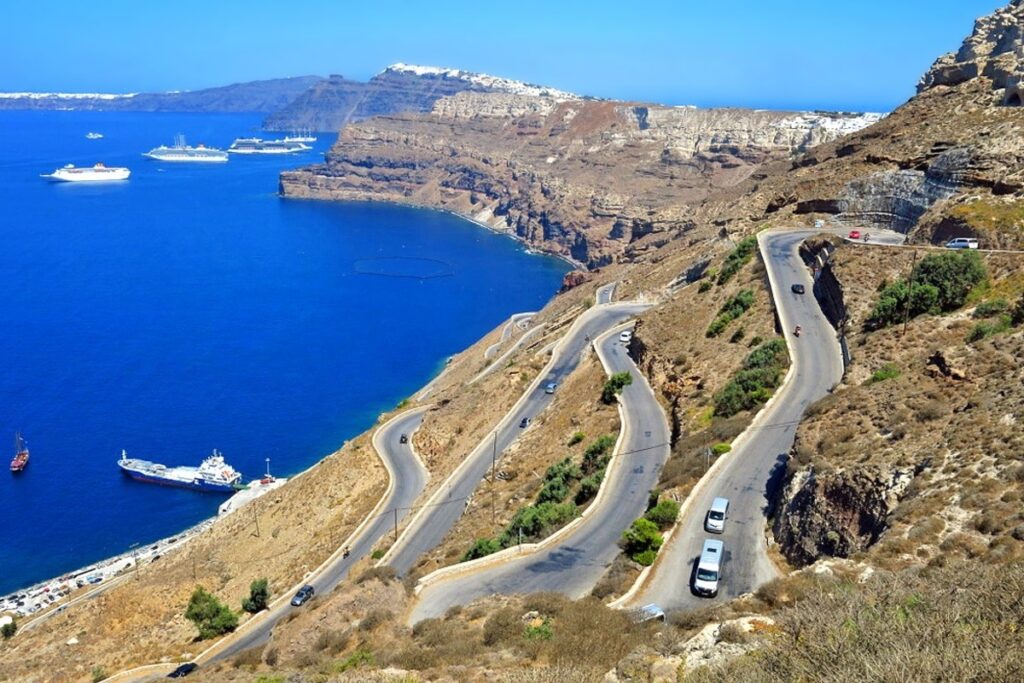
Hiring a car in Crete is the best way to see the island's hidden beaches and mountain villages, but the rules can be a bit more specific than in other parts of Europe. 10 requirements driving in Crete.
Here are the 10 key requirements for renting a car in Crete:
1. Valid Driving License
You must hold a full, valid driver’s license. Most agencies require you to have held it for at least one full year (sometimes two) before the rental date. 10 requirements driving in Crete.
2. International Driving Permit (IDP)
- EU/UK/US/Canada/Australia: As of recent law changes, licenses from these countries are generally accepted without an IDP.
- Others: If your license is not in the Latin alphabet (e.g., Chinese, Arabic, Cyrillic) or is from a non-EU country not mentioned above, you must carry an IDP alongside your original license.
3. Minimum Age (21–23)
While the legal driving age in Greece is 18, most rental companies in Crete require you to be at least 21 or 23. For luxury or larger vehicle categories, the minimum age often jumps to 25.
4. Young/Senior Driver Surcharge
If you are under 25 or over 70, expect to pay a daily "Young Driver" or "Senior Driver" fee. Many companies have a maximum age limit, typically around 75–78.
5. Credit Card in Main Driver's Name
Most major international agencies require a credit card (not debit) to hold a security deposit. Local Cretan companies are often more flexible and may accept debit cards or cash deposits, but you must verify this in advance.
6. Passport or National ID
You will need to present your original passport or a valid National ID card (for EU citizens) at the time of pickup.
7. Mandatory Insurance (TPL)
Third-Party Liability (TPL) is mandatory by Greek law and is almost always included in the base price. Most travelers opt for Collision Damage Waiver (CDW) to reduce their financial liability in case of an accident.
8. Fuel Policy Compliance
Most rentals follow a "Fair Fuel Policy" (return the car with the same amount of fuel as when you picked it up). Check your contract to see if it's "Full-to-Full" to avoid high refueling service charges.
9. Geographic Restrictions (No Ferries)
Most rental agreements in Crete prohibit taking the car on a ferry to other islands (like Santorini) or the mainland without explicit written permission and extra insurance.
10. Paved Road Usage
Standard rental contracts strictly prohibit driving on unpaved or "off-road" tracks (common near beaches like Balos). Any damage to the underside of the car or tires on these roads is usually not covered by insurance, regardless of your waiver. 10 requirements driving in Crete.
Quick Tip: If you plan on visiting Balos Lagoon, consider a local rental that offers specific "4x4" coverage, or better yet, take the ferry from Kissamos to avoid voiding your insurance!
Are you planning to pick up the car at Heraklion or Chania airport?In short: Tourists are generally "cautious," but often in ways that frustrate locals.
While tourists in Crete are rarely the ones "speeding" or "weaving," they often struggle with the island’s unique unwritten rules. Here is how the driving dynamic usually plays out:
1. The "Shoulder" Lane Etiquette
This is the biggest point of friction. On the National Road (VOAK), which is mostly a single lane in each direction, it is customary for slower drivers to pull over onto the wide paved shoulder to let others pass.
- The Tourist Mistake: Tourists often stay in the middle of the main lane (which is technically correct by law), causing long queues.
- The Advice: If you see a local tailgating you, they aren’t necessarily angry; they are waiting for you to move into the shoulder so they can pass.
2. Speeding vs. Over-Caution
Locals are very confident—sometimes aggressively so—on narrow mountain roads they’ve driven a thousand times.
- The Tourist Mistake: Tourists often drive significantly below the speed limit on winding roads. While safe, this can lead to risky overtaking maneuvers by impatient locals.
- The Advice: "Go with the flow." If you want to drive slowly to enjoy the view, pull over frequently at designated viewpoints to let the "train" of cars behind you pass.
3. The Roundabout Confusion
In Greece (and specifically Crete), the rule for roundabouts is often the opposite of the UK or US:
- The Rule: Vehicles entering the roundabout often have priority, while those already inside must yield (unless signs like "Stop" or "Give Way" say otherwise).
- The Tourist Mistake: Tourists often assume they have right-of-way once inside, which can lead to near-misses.
4. Navigational Distraction
Crete’s scenery is stunning, but the roads require 100% focus.
- The Issue: Tourists are frequently caught "sightseeing" while driving or stopping suddenly to take a photo of a goat.
- The Hazard: Mountain roads have "falling rock" zones and wandering livestock (goats/sheep). A tourist slamming on the brakes for a photo can cause a multi-car pileup on a blind bend.
5. Night Driving
 Tourists are generally less careful about planning for sunset.
- The Risk: Many mountain roads have no streetlights and no guardrails. What was a "charming" drive at 2:00 PM becomes a nightmare at 9:00 PM. Local drivers are used to the dark; tourists are not.